
Podcast: Pornography, addiction, and the Church: A conversation with Ian Henderson from The Naked Truth Project
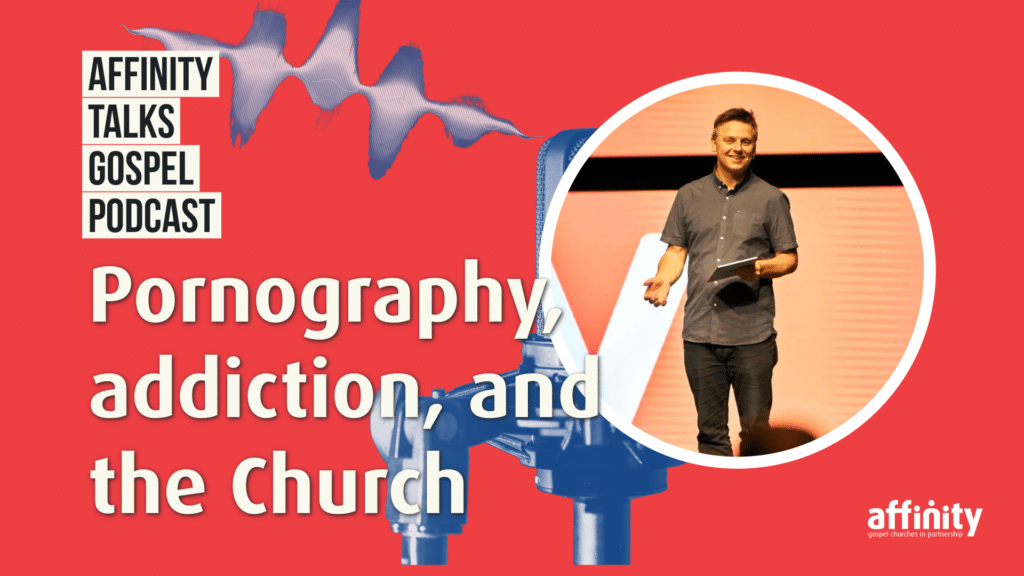
This article is part of the Affinity Talks Gospel Podcast series.
⚠️ Content Warning: This episode discusses sensitive topics related to pornography and its impact on individuals and society. While handled with care, parents may wish to listen first before playing it around younger children.
In this episode of Affinity Talks Gospel Podcast, Graham Nicholls and Lizzie Harewood are joined by Ian Henderson, Founder and CEO of the Naked Truth Project, a ministry committed to ‘opening eyes and freeing lives’ from the damaging effects of pornography. Ian shares his personal story and explains how the accessibility and nature of online pornography have changed dramatically in recent years, creating serious challenges for individuals and society.
The conversation explores the reality of porn addiction, its impact on relationships and mental health, and the Church’s role in offering hope and support. Ian provides practical advice for parents, pastors, and church leaders on how to engage with the issue, helping those who struggle and equipping the next generation to navigate a hyper-sexualised culture.
With insights from neuroscience, biblical teaching, and over a decade of ministry experience, this is an essential conversation for anyone seeking to understand the pervasive influence of pornography and how to respond with wisdom and compassion.
To access the free resources the Naked Truth Project provide visit: nakedtruthproject.com
Subscribe: Spotify | Apple Podcasts | YouTube or wherever you get your podcasts.
Topics addressed in this Podcast:
- The impact of pornography on individuals and society – Ian Henderson explains how the accessibility and nature of online pornography have changed dramatically, leading to addiction, relationship struggles, and broader cultural effects.
- Engaging with non-Christians on this issue – The discussion explores how to talk about the harms of pornography in secular settings, using scientific research and real-world consequences rather than purely theological arguments.
- Cultural double standards and the ethical porn debate – The episode examines society’s contradictory attitudes towards pornography, including the increasing push for so-called ‘ethical’ porn.
- How churches and pastors can address pornography – Practical advice is given for church leaders on how to talk about this issue with their congregations in a way that reduces shame, offers hope, and provides meaningful support.
- Resources and support for those struggling – Ian shares information about free tools and programmes available to individuals, parents, and churches to help those affected by pornography use and addiction.
Transcript
[AI generated]
[0:11] Hello and welcome to Affinity Talk’s Gospel Podcast.
[0:14] You are most welcome. My name is Graham Nicholls, the Director of Affinity, and I’m joined by Lizzie, who can introduce herself.
Hi, I’m Lizzie. I am Executive Officer at the Association of Christian Teachers, but I’m here to help host this podcast, and we’re here as well with Ian Henderson from the Naked Truth Project. Have I got the name right there?
You have, yeah. Naked Truth Project is exactly right.
I didn’t know whether it had the definite article there.
Well, do you know, I’m sure the branding people in our team would be very concerned about whether it’s there or not. I tend to be a little bit more flexible about whether I include it or not.
We’ll get an angry email at some point.
That’s right.
Tell us a bit about yourself, Ian, sort of before we’re talking about the actual organisation. Tell us anything that would be useful to know about you.
[1:14] Yeah, OK. So I live in Manchester with my wife and we have two daughters. So one is 21. She actually lives in Rio at the moment. So that’s where she is. And then our other one is nearly 18 and she’s still with us in Manchester at the moment. I’m not, as you can tell by my accent, a Mancunian by birth. So we moved up about 20 years ago, a little bit longer than that, to do some work here and have stayed. So it’s our adopted city. But yeah, and that’s where we are. And what else do you want to know? We’ve got a smelly dog.
Where did you grow up?
[1:57] Well, a little bit all over the place. I did my teenage years in Norfolk, actually on the Norfolk coast, a place called Hunstanton – Sunny Hunny – was where I went to school.
[2:11] I was actually born in Oxford and so kind of spent some time in Oxfordshire as well before that.
[2:16] So yeah I’ve moved around about and so I have a few little Norfolk accent things so i say ‘Jan’ry’ instead of ‘January’! But I do say ‘human’ not ‘human’ – so I’ve somehow kept some things and not other things from being from Norfolk.
Would you call yourself a nowhere person? That’s the kind of sociological definition that people are–
Oh, that’s not one I’ve heard of – yeah, I guess yeah it’s interesting, isn’t it. I mean, my girls are born and bred Mancunians and there’s definitely identity in that, isn’t it, for people who have been in one place all their life, certainly throughout their childhood, but yeah, I’ve not heard that one before – a nowhere person.
Yeah, I think that there’s somewhere people and nowhere people. A nowhere person is a person who’s moved around a lot.
Okay.
You can google, there’s probably a better definition than I’ve just given you, but it’s a kind of phenomenon. It’s changing a bit. Because of economics, lots of people are going back to their hometowns to live after university now, so they become a bit more rooted in their area. What would you call yourself, Lizzie?
I mean, I’m a northerner – I was born in the northwest, actually, spent my first 18 years there. But I’ve moved around i’ve also lived in Oxfordshire, Ian,
[3:32] and Wales and now I’m in Yorkshire. I’ll definitely say i’m a northerner, yeah. Ian,
[3:41] you started this organisation, which we correctly named, ish, Naked Truth Project.
[3:47] What is it? And then you can tell us why. And then maybe a follow-up to that. But what is this project? And then why did you do it?
Yeah, so Naked Truth has a mission to open eyes and free lives from the damaging impact of pornography. That’s our ‘what’. And in many ways, that’s really, I guess, two key areas of work. So we talk about having work that’s both upstream and downstream. So downstream would be where we know in society, in local church as well, people are drowning because of their porn use. There’s addiction, there’s struggle, there’s dismay, there’s discouragement. And so part of our work is recovery work. That free lives bit is about actually providing practical support and help trying to pull people out of the water, trying to give people hope and help that they need. But also you maybe heard the kind of famous Desmond Tutu quote
[4:57] or story, it’s almost like a parable really of a man who was rescuing people that he saw were drowning in a river and then he would rescue one and then another and then another. And Desmond Tutu says at some point, someone has to go upstream and find out why all these people are falling in the river in the first place. And I guess that’s the other part of our work really. So as well as that kind of restorative recovery work, we are also involved in awareness and education. So we work in schools with high school aged pupils. We work with parents. We work with parliament. We are just trying to address that question as well of how do we get people to a place where they can understand and see the harms of pornography and hopefully have less people falling in in the river and drowning. So, yeah, Open Eyes is awareness and education. Free Lives is recovery and support. And we’ve been doing that for over 10 years now. So I started the project around 2012.
[6:05] We established a charity in 2014. So, yeah, this last year we were celebrating 10 years of being an established charity. And I’ll be honest, I didn’t sit down with my careers advisor when I was in my school in Sunny Hunny and say, yeah, when I’m 40, I might start a porn project – that feels like a good idea – that feels like a career move I’ll make. But it is something certainly I felt over 12 years ago that God was asking me to step into. And I think now, more than ever, I think both within the church and within society, people can see the need for that and the importance of that. But I’ll be honest, when I started, it felt like a very taboo thing to talk about. It was… taboo I think to even mention porn in church settings. And it was taboo within culture to suggest there might be something harmful about it, you know, people would talk about it but there wasn’t an acknowledgement that it might be addictive or it might be, you know, dangerous or harmful to people. And so I think, over the years, we’ve seen a shift – we’ve seen people begin to understand some of the harms but I think we’ve still got a little way to go.
[7:29] So Ian, on the website – I did a little research before we met online and just reading a little bit of your story illuminates why you feel so passionate about this. I wonder, do you feel comfortable in sharing any of that or is that something you prefer not to talk about?
No, absolutely, yeah, I’m very happy to because it is it is an important part of that ‘why’ question that Graham asked. I mean, really, I talk about two things that that happened in the year 2007 – so my daughter was born in the year 2007; that’s not one of the two things. But in that same year one of the things that happened was very personal and one was was very public and everyone would have heard about it. The personal thing was that my father was arrested for having indecent images of children on his computer – abusive child pornography. And for us as a family that came as a complete shock. We had no idea that even,
[8:44] you know, porn use was something that my, my father was struggling with particularly. It came out of the blue for us. He was Christian, involved in church life, was a CEO of a youth charity where he lived, he was – you know, perhaps not, if you were to meet him, someone you would think would be struggling with with that or involved in that. And what we what we found out over the following year was that he had hidden what I would call a porn addiction for decades and towards the end of those decades that had escalated and that had spiralled into him crossing the line from legal mainstream content to to illegal
[9:35] abusive content and I think, for me, one of the things that felt significant about that for us as a family, particularly a few years later when I was probably in a place where I was beginning to reflect a little more, you know – obviously, initially you just have shock and pain and all those other emotions that you have to think about – but I began to think about the fact that I did know who my dad was. You know, I knew who he was, what values he had, what beliefs he had, and I began to just try and understand – really, as I said – that that his porn use wasn’t just a discipleship problem or a habit that he wasn’t dealing with or talking about. That there was something else happening here and, as I say, you know –about over a decade ago, I don’t think
[10:38] we had the research, perhaps, we have now society around things like non-substance addiction. For example, I think we now understand you can get addicted to gambling, for example, or you can get addicted to your phone or, you know, we’ve got a bit of a better of understanding around addiction. But I think, for me, that was the first time I began to read and research and perhaps understand something of my dad’s journey that, yeah, this wasn’t just about
[11:11] when he was using pornography, it wasn’t just about choice. There was something more going on there – that addiction I think was playing its part. And so that began for me then, I think, a road of thinking around, well, what sort of support – what sort of help did my dad need? And if he had taken that help much earlier on, you know, if he had found that help when he was looking at mainstream websites and things like that, what would that have prevented for his life? And also, obviously, in terms of what would that have prevented in terms of the victims of abuse who were involved in the material that he was found with? There was a question there, of what could have stopped this from happening? And so that’s why our work is focused on people who struggle with mainstream pornography. We don’t work with offenders. We don’t work with people who may have crossed that line themselves. There are some amazing organisations out there that do that work. But our work as Naked Truth is focused on those individuals, Christians or non-Christians, faithful/no faith who have reached a place where they’re recognising that porn use has become a life-controlling issue – it’s become uh something they can’t just, through willpower
[12:40] or even accountability just stop – that it seems to become more than that and, actually, offering them some of the kind of professional support in the same way that you probably wouldn’t just say to an alcoholic, ‘You just need to try a bit harder,’ – you know, that there is perhaps a need for: yes, prayer but also professional support. That’s where we began to to ask questions about what would it look like for someone to get get help when they need it and so that was that was one of the things that that I think caused me to think about Naked Truth was simply asking that question. What would my dad have needed? And because it’s such an issue that has so much shame attached to it and so much – often things are hidden and a secret. And so I think we began to explore options, which you can talk about later of – how could somebody access help? That might not mean they just go to, you know, their local church leader or a group that’s running somewhere. Is there ways in which people could get help? So back in 2014, we started online groups on this strange platform that no one had ever heard of called Zoom.
[14:02] Because we recognised, actually, the technology that had given anonymity and accessibility to what was harmful – that same technology can provide anonymity and support to people who perhaps didn’t feel able to go and talk to somebody quite yet. And so, yeah, that that was how all Naked Truth began really. It was just going, okay, let’s just explore this. Could we do something – could we offer support and help online so that people could access it, perhaps in their car at lunchtime when nobody knows, but begin to get some of that support and help. But in that same year – sorry, going on –
Go on, you know, you go with your second point because you’re – I couldn’t quite work out whether the two points were encapsulated in what you
[14:47] just said. So keep going with your point.
Yeah, well, no, just the second thing that just happened in that same year was that Steve Jobs stood on a stage in California and held this piece of plastic in his hand saying, ‘Today Apple will reinvent the phone.’
[15:01] And it was the same year as smartphones being launched. So although I think, you know, we recognize that porn’s been around forever, really, what happened really in that year was seismic. It was a game changer because it really was the beginning of a new generation with anytime, anywhere access to unregulated content. And as I say, my daughter was born that year. That’s all she’s known. So her whole lifetime, smartphones have been part of her life. She is what psychologists and sociologists call a digital native. You know, that is all she has known. And that shift from, you know, the sex shop to the smartphone, for example, is significant in, I think,
[15:54] how big this has become as an issue. And so I think probably even back then, you know, people would be saying, ‘Well, you know, isn’t this just something that some people struggle with sometimes? And so, yes, that happened to be your dad but is it really that big a thing?’ Whereas I think now what we understand is this is huge. So in 2020 for example 49% of UK adults uh told Ofcom that they’d seen porn that month. So, you know, what we’re seeing here is that a porn user isn’t just a man in a dirty mac coming out of a sex shop. It’s anyone who owns a product made by Mac or Samsung. That shift was really significant. And so that’s another reason – that’s another part of the ‘why’. There is that personal story but actually the other ‘why’ is that this is an old enemy, but with new weapons, if you like. This is something that, even in the lifetime of our children, has changed almost immeasurably. We can’t really quite comprehend it. And so you say the word pornography, and that will mean different things to different people and different generations.
[17:10] You know, to some people, they just think, oh, a few magazines or VHSs.
[17:15] And they’re like, oh, is it really? Why? Does it really need a charity? Whereas for other people, you know, it means this digital world that is actually huge. You know – yeah go on –
Sorry, I was just wondering could you – so I guess, as Christians, we have the Bible which tells us exactly how we can healthfully conduct relationships, including sexual relationships. But how do you – when you’re faced with people who perhaps aren’t believers, how do you lay out the damages that pornography does? So if you’re speaking to parliamentarians, what is your mission statement? Why is porn so bad for society, for families, for people?
Yeah, I mean, one of the things we would do – for example, in school – so I think we’ve seen something like 100,000 school pupils in the last decade and obviously the majority 99.9% of them would be non-faith based schools. We do a few things in a few faith schools but mostly we are doing exactly what you’re saying – we’re having to put forward the reasons why porn might be harmful to young people who think this is just normal and a bit of harmless
[18:37] fun. Why wouldn’t they? ‘Great, you mean I can get onto a
[18:41] porn site for free and I don’t have to prove my age to anyone – what what’s the bad news?’ You know, that’s where they are. And so having to start from that point and help them think that through is a key part of our work. Really, there’s three areas that we would focus on in school for example. And this would be a similar conversation but in a different way if we were talking to to parents or parliamentarians. The three areas really that we focus on is how porn
[19:11] is harmful to our physical health. So we would point to the peer-reviewed research now that there is increasing amount of that – we’ll talk about how digital porn is a super stimuli in terms of the way that the brain works and so therefore the way the brain responds to porn is that there is an overload of those kind of natural chemicals like dopamine and other neurochemicals that the reward system gives us. So people do get a high but also what comes with that is escalation and tolerance so that what used to turn you on six months ago doesn’t in the same way anymore. So you need to do more of it or a more extreme version of it just to get the same feeling that you had and so what we’re seeing through that scientific research is that porn use can and does lead to addiction and dependency.
[20:13] So that’s one of the things we’d talk about. We’d also maybe talk about what is becoming an increasingly recognised phenomenon within
[20:23] the NHS of porn-induced erectile dysfunction, for example. I don’t know if you were expecting to talk about that in your podcast but that is now something that GPs are diagnosing. They’re noticing men in their 20s, mid-20s, coming to see them around this problem. And tdoctors are linking the fact that those individuals are only able to have an erection when they are watching porn but in real relationships, in real life, that isn’t happening and they’re also acknowledging that perhaps those young men have been using porn for 10 years – they started when they were teenagers, when they were 15, and 10 years on this is what’s happening. So these are physical things that are happening with the body that we would talk about. You know, that that’s not a moral or value-based thing – this is physically what we’re learning and understanding. In the same way that back in the 1930s, doctors would prescribe and recommend cigarettes because there just wasn’t the scientific research. They just thought it was a bit of harmless fun.
[21:24] We are realising now that the medical research is helping us understand that there might be a public health issue here around porn use. And that’s one of the conversations we’re having with parliamentarians certainly: can we get porn to a place where in the same way gambling is now, it’s called a public health crisis. And there are other countries where they’re probably a little further ahead on that kind of declaration and understanding.
[21:57] So there’s that piece. The second thing that we would talk about is the impact that porn has on our relationships, the way we see ourselves, our self-esteem, our body image, some of those things, mental health around that. And there’s kind of various statistics around mental health and porn use, but also just the way we see other people and the way that we we treat other people. So again, you know, there’s been government reports linking violence against women and girls and porn use and there is this link between those things. And it’s not surprising really, you know, when you when you find out that 88 of porn videos contain physical violence or aggression and 97% of those – the targets are women. And then you have people like the NSPCC talking to young boys and 44% of those young boys say that porn influences their ideas about what sex should be. And it is, you know, it’s not difficult to imagine that if this is the majority of the content –
[23:10] because one of the things that’s changed is not just how accessible porn has become, but what the actual content is. It has become abusive and violent. If a teenage boy puts porn into Google, what they don’t get is topless pictures of Sam Fox like I would have if I was looking for that when I was a teenager. It is violent, abusive, aggressive content. What we would probably call hardcore content. It’s the first search results. And so the links that we’re now beginning to see between how that affects the way that young men and boys feel they’re supposed to treat women and in relationships, the way that young girls feel they’re supposed to respond in relationships is all being normalised and shaped by porn. So that would be a second thing that is a huge concern to lots of people in society, whatever their values are. And then the third one really is the industry itself and just what we’re understanding now around the exploitation and the coercion that in some cases –
[24:12] examples of trafficking and exploitation that exists within what is actually an unregulated and very dark industry. And so they’re three areas where we want young people, for example, to ask – ‘Well, you know, is this good for me? Is this good for my health?’ We want them to be thinking about what’s in it – what are the messages, what are the ideas that I’m being taught, and and how did it get made? You know, what’s the actual story here behind this screen? Who’s the other – who is that person?’ And so they’re all ‘speak of the harms’ and there’s more we could say if you start to bring in faith as well and things like that. But in that kind of non-faith context, there’s still a very strong argument that I think people go, yep, that makes sense.
[25:02] That’s important. We need to be talking and thinking about that. Just a couple of other clarifying questions. One’s more of a cultural one. Is it true that there’s a sort of – I don’t know what you call it – a double standard or a confusion in culture generally in that
[25:18] they can see some of those harms you’re talking about and society would generally frown on abusive children and abusive videos and they would talk about addiction as being a problem –
[25:30] but, I guess, there is a difference between faith groups and Christians in particular and general culture in that pornography in its broadest sense is not considered bad. Is that difficult to navigate sometimes? Because you can talk about the harms in narrowly defined ways that perhaps most most of culture agrees with – but most of culture doesn’t agree that it’s bad in general. Is that true?
Yeah, again,
[25:57] I think it depends, doesn’t it, who you’re talking about in culture. And certainly there would be people who wouldn’t have faith but would have a problem with the objectification of other human beings for example. And you might have you know someone who would say, ‘Well, I have no faith but I am a feminist and therefore my issue with this is around the way that women are being objectified or sexualised or whatever. And so you might have those conversation with someone who that’s their reason for saying, ‘Actually I don’t think this is fine.’ And I think what’s shifting is I think people who say, ‘Oh no, it’s fine, what’s the problem?’ tend to be operating from a lack of understanding of what pornography has kind of morphed into. So they’re still using a slightly old lens in terms of their thinking. They are thinking of porn as just those magazines – and it is – and so they think it’s just what they used to see but it is now online and they’re not
[27:06] necessarily thinking about – I think when people have a deeper understanding of the violence or the exploitation or the nature of content, it is a lot harder to find people going, ‘Oh no, okay, this is is all right now then politically.’
[27:26] People might say, ‘Well, we still believe in freedom of speech – we still believe that porn sites should be allowed to exist and people should be able to put up what they want and and stuff like that.’ But I think particularly a lack of regulation around consent – the lack of perhaps ethical practices in terms of how porn is created, the majority of people are concerned about now because of what porn’s coming from. So they would argue for a more ethical porn. You know, that would be their argument.
Can I jump in there? Because I suppose through some of the work that I’ve been doing,
[28:05] I’ve noticed there has been increased awareness about the extreme violence and the kind of immoral practices that have been involved with pornography. But there’s something that does unnerve me in that in many sort of sex and relationships and education lessons, children are now being asked to consider the morality of not necessarily porn, full stop,
[28:35] but how porn can be produced ethically. And I’ve seen a number of lesson plans and even videos that have been offered to children through curriculum where they are given better alternatives to access porn that has been made ethically – that has been made with full consent, that represents a range of body types. Now obviously I have a moral problem with that because of the way that those people are being objectified anyway, whether they’re being paid substantially or not, and because of the way that sex and promiscuity is portrayed in this way – that is given this, ‘As long as you’re doing ethically it doesn’t matter in what context or whom you’re doing it with.’ And then there’s just that problem again: being exposed to explicit material which in itself is wrong. We know what the Bible says, but also then can still lead to more extreme forms. But yeah, what do you have –
[29:37] what’s your perspective on the ethical porn industry?
[29:43] I mean, my perspective as a Christian, for me as an individual, I would be saying, well, that’s an oxymoron still in my mind. You know – ethical pornography – I don’t see how pornography can be ethical because of what it is. But in nature, I do understand the importance of of journeying with people and meeting people where they are when you’re kind of talking about some of this stuff. So I would
[30:25] if we’re talking about something within a kind of parliamentary context, you know, I would be wanting, I would be saying ‘Regulation is a good thing. We want better regulation around this.’ And so I could campaign for all forms of porn to be illegal.
[30:48] And that could be my aim. I could say, let’s just make it all illegal. But I recognise that’s probably not realistic. So actually it it makes sense for to be saying, actually, we want to find where there is common ground and common belief and so to work with organisations who, for example, might be wanting to see ethical pornography as their end goal. There’s so much work to be done – let’s join forces in getting to that first step, if that makes sense, because something that is “ethical” is certainly better than something that is unregulated. So I think I would want to work towards what is better, but it might not be my ultimate belief that is what’s best, if that makes sense. And I think one of the problems we can sometimes have as the church is how we posture ourselves in some of these conversations – sometimes we posture ourselves with a little bit of a
[31:58] a moral ‘This is wrong’ – which we may believe, but I think sometimes that is then difficult for people to work with us, to actually find a common change that we would equally want to achieve. And so I don’t know if it’s always helpful for people to say I’m – we would say as an organisation, we’re anti-pornography. We could just say we’re anti-addiction, but we don’t. We say we’re anti-pornography.
[32:36] But we recognise the fact that there is the potential to see change through collaboration. And part of that collaboration, I think, is working with people who might not have the same end goal.
Yeah, I suppose, in increments.
Yes. Similar in some of the abortion discussions and we hate abortion, but if we can move the limit to be later,
[33:08] earlier, sorry, for abortions being illegal, then we’d say that’s a good thing. That’s a win, even though it’s not pure.
Can I ask you a really backward question then? We need to go forward to what should pastors and parents know and what should they do, but it’s one a really basic question which, because you were in such good full flow, I didn’t ask – give us a definition of pornography.
Of course.
[33:32] As compared to films that people might watch – that might show people having sex.
Yeah, that’s a really important. So again in school we give two definitions of pornography. The first is a dictionary one, which would be pictures, images, and films that are designed to stimulate sexual excitement. And that’s like a Collins English dictionary definition, that actually would include your Netflix series where there’s some sex scenes in. But what I would say in a school setting, for example – our team would say in a school setting, ‘Imagine walking around a museum with your grandma. And you walk into a room and there’s a load of naked statues from the Greek era. Are you looking at porn with your grandma?’ So we are clear to say
[34:29] the purpose, the function, is important in the definition. So probably the museum curator wasn’t thinking about trying to stimulate sexual excitement for that to make money. They were probably thinking about art and history, whereas you could actually watch a pop video on youtube that has no nudity or sex in but could be pornographic because of how it’s filmed. And how it’s filmed is aiming to stimulate sexual excitement to get more clicks and views so it’s not as simple as saying is it about nudity or is it about seeing sex because that definition for me broadens that understanding and also allows art and allows for – a life drawing class is probably not – I think a christian could sit in a life drawing class and not feel like, Oh my goodness, am I creating pornography as I draw this person in my doing my art degree?’ I would say, no, you’re not.
[35:29] So that’s how I would define pornography. But then the second definition we use. Yeah. The second definition we use is that pornography is the junk food of healthy sex and relationships. And so what we talk about in school is that there is something better and there is something beautiful about about sex and about uh you know commitment and love and relationships with others. The problem is that what what porn is often is that kind of quick fix, easily accessible,
[36:04] damaging to our health version of what is actually a good thing. I think it’s again important for us to posture ourselves as as saying sex is a good thing. It’s just that porn is a kind of counterfeit, hollow, reduced version, an unhealthy version of something that is good and is beautiful. And we would say, given and created by God. And so that’s another part of the definition for me. We talk about how Jamie Oliver is somebody as a chef who is passionate about food but has been campaigning against junk food for decades now. It’s possible to be passionate about sex and relationships and campaign against what is unhealthy in something like porn. And I think again that’s part of our challenge as the church is how we talk about sex and relationships in a way that, that is actually positive and healthy
[37:07] and actually acknowledges what is good as well as acknowledging
[37:13] what is damaging. I think maybe historically, in our desire to acknowledge what is damaging about sex we either don’t talk about it at all – or we can come across slightly like we’re anti anything that’s to do with that stuff. But hopefully we understand that, in the context of love and commitment and relationships, this is a beautiful and a good thing. And particularly for teenagers, for example, which is as I say, where we would talk about this – something people are very curious about. So not talking about it doesn’t help because then they get their sex ed from porn, which is the worst place to get it from. I think Lizzie would understand that we’ve got to be talking about it rather than just ignoring it or hoping that it’s going to go away, because it’s not. Particularly if you’re a teenager.
Did you have a point, Lizzie, just now?
[38:26] I’ve got lots of points, but I want you to have the opportunity to ask questions, Graham.
No, the thing is, Ian, this is so interesting. We could do another couple of hours on this because you’re both passionate and well informed about it.
[38:40] So we’re benefiting from all that. So it becomes a bit unstructured in my mind because I’m thinking about 100 questions at the same time. Just trying to narrow it down to thinking about people who might listen to this. There could be parents, there could be pastors. What should they know and what should they do?
It’s not a simple answer but just to get started – I mean, yeah, for example we have talked about it and we do make references sometimes in sermons about it. We’ve done separate seminars on it, actually, we’ve done some of our own, but actually we’ve got one of your speakers coming to speak on a Sunday evening in February, I think – yeah, so we are talking about it. But what should we know – what should we be doing as christians particularly?
Yeah, let’s maybe separate the two because I think there is a unique conversation, perhaps, around for parents. And I appreciate there’ll be people who’ll be thinking about this with almost with two minds as they listen to this, they might be listening as
[39:47] a parent going, ‘Oh my goodness, this is my children and the world they’re growing up in. Even if I’m not struggling with this, oh my goodness, what do I need to do to help them, protect them, talk to them?’
[39:58] And then there may be people who have children or don’t have children who are either thinking about themselves or people in their congregation or their small group or whatever. And they’re like, ‘What does it look like to talk about it and help me or them?’ And so let’s separate the two. I mean, I think the important thing to say at the beginning – I would say is the first thing that we need to be intentional about – is reducing shame and offering hope. And I think whether we’re talking to our children – or whether we’re talking to the person in our small group who said, ‘This is something I’m struggling with’ – or in our church if we’re a church leader – or even indeed if we’re talking to ourselves. I think there is so much shame attached to this, particularly within the church context. It’s something that we’ve kept in the shadows. It’s something that we’ve not talked about. And because of that, that is just perfect conditions for shame to grow. And that shame is evident in all sorts of ways.
[41:10] It hugely affects the way we see ourselves. It hugely affects what we think God might think of us. It hugely affects what we think we are qualified to do within the church. You know, lots of church leaders, are so frustrated that people aren’t stepping up and doing more. And what we find with the hundreds of Christians that we speak to every year, those who are going through our programs and our groups, so many of them who are Christians will say, in the church context, I felt I couldn’t get involved with this. I couldn’t help with that. I couldn’t do this because I was questioning whether I’m even a real Christian because I struggle with this issue. And so trying to reduce shame sounds obvious, but as you talk about something, that is often the immediate response. So yes, we need to talk about it. Yes, we need to be kind of bringing it into conversations, into sermons, creating spaces for conversations to happen. But we have to not just talk. We have to talk with the right tone. We’ve got to talk with a tone that reduces shame and offers hope to people. And one example of this might be, for example.
[42:33] In a recent Barna report, which came out last year – so very recent statistics of Christians and churches around this issue –
[42:47] 75% of Christian men and 40% of Christian women admitted to watching porn occasionally. 22% of practising Christians said they watched porn weekly and 7% daily. So we’re talking quite a lot of people in your congregation, potentially, you know, this is a real life issue right now. It’s not just something that they struggled with in the past. This is something that they’ve dealt with this week or this month, or maybe even today. And so how we talk about that is really important. Interestingly as well, from that same report, 44% of women reported watching porn. So kind of closing that historical gender gap that we think exists. And I remember, for example, in one of our team who had struggled with porn in her adult, young adult, life, and was a Christian and was in church, she said, ‘The only time our church talked about porn – there was one time. And there was a Sunday service. And the person who was talking about it got up and said, “Guys, today we’re going to talk about porn. I know that’s going to be tricky. I know it’s going to be difficult. And so, ladies, you can just switch off right now. Because for the next 20 minutes, we’re talking about porn.”‘ And what that did, what seemed like just a little humorous, kind of just trying to ease into what is a difficult topic actually
[44:12] really caused a huge amount of shame for her because she’s like, ‘Well, I was already questioning, is there something wrong with me? Am I the only one? I’m a Christian woman looking at porn. Is there something seriously wrong with me? Am I a real woman? Am I a real Christian?’ And it just reinforced that. So I use that story just to highlight how important it is. You know, people talk about being trauma informed in the way that we act and respond. And that’s actually really important in this area too. But being shame informed, make sure that we are thinking about that as we talk about it.
[44:49] And then in the same breath, talk about it with hope as well.
Go on, Lizzie.
Yeah, I just, I want to – not push back, but I just want to ask a question. How do we then as Christians –because I think it’s a really good point: the more that we kind of hide things and keep them underground, I suppose the greater the potential is for them to fester and for the problem to get worse because no one must seek help. But how, as Christians, do we keep that tension between not inducing monumental amounts of shame, but also saying that there is something that should induce a certain level of regret and shame about some kind of behaviour? And that’s not to demonise people who struggle with this in the same way that you shouldn’t demonise people who have a gambling addiction or are an alcoholic or occasionally drink – I suppose that’s what I’m trying to say: is there not some kind of
[45:49] innate instinctive thing that God has placed in us, that there is something shameful about this? But how do we keep that tension?
That is right, I think, yeah I think it’s a really good question. I was thinking about what Ian was saying about how we speak about it. And I know I’ve done better and done worse in that sometimes you can highlight it in a way that suggests it’s the worst thing you could possibly be doing and it’s in some special category all of its own. But I think, just in the same way you would want to encourage people not to envy, not to be greedy, not to lie,
[46:31] you want to prompt and prod people’s consciences, if they are watching pornography, to say this is morally wrong, this is wrong before God, and this is something you will need to repent of. But at the same time, like we would do with every sin, encouraging people to say there is forgiveness and there is freedom, and there isn’t shame in the sense of
[46:55] desperate shame. I’m not quite sure that’s the right word – there’s a difference between repentance, yeah. I don’t think shame is biblical but I think recognising wrong is biblical. Yeah, shame is a kind of an unsatisfiable desperation. I see people who will not repent actually because it’s even too shame to repent. Sorry – I’m taking over the answer but I’m reflecting on it out loud.
Yeah, I mean I think I think there’s two things that occur to me as you ask that question. One is context. As I think about Jesus and how he corrected and challenged people, what I think is really interesting is in public settings, it feels like he focuses particularly on the people who are broken or powerless or hurting, he focuses on the good news. He focuses on restoration and, ‘It doesn’t have to be like this. There’s something better. There’s hope for you.’
[48:03] And I think that would be one of the things I would say when we’re in that kind of wider context where we’re talking about this issue. Let’s talk, let’s raise it. Let’s take it out of the shadows. Let’s talk about it as, ‘We know this is something that some people in the congregation will be struggling with this.
[48:24] We want you to know that actually we believe that this isn’t who you are. This isn’t your identity.
[48:30] This isn’t the sum of you. This isn’t your future. That God actually has something for your life that doesn’t have to include this. And that you can, yes, be forgiven, but also you can be restored and you can be healed.’ And it’s a language that acknowledges that it’s a reality, but it focuses on what is hopeful. I think then when you are one-to-one with people that’s where there is context to maybe be a little bit more, ‘Hang on a minute, that’s not okay is it – you said you were gonna do something that you didn’t do and that’s why you’ve fallen down again, because you actually didn’t put into place the things that you knew you needed to.’ And that can be a bit more direct, but I think because the context is small group or one-to-one. No one knows what Jesus said to Zacchaeus, right? When they were having dinner together, but what he did in public was acknowledge him and accept him. What happened in a private conversation somehow led to repentance that you were saying, Graham, and we don’t know what happened in those private conversations. But I think that that’s helpful for me is that when I think about talking about it in a public space, I want the main feeling to be one of acceptance and hope and good news and change. And then when we’re working with individuals, pastorally or
[49:59] in friendship – I think that’s when you can be a bit more direct and corrective.
[50:04] But because there’s trust and there’s relationship and love, it reduces the shame.
So is there more you want to say in terms of ‘what’ because we’re nearly out of time? Is there more you’d want to say to make sure sort of church leaders and youth leaders and so on would be aware to do? I think we’ve said quite a lot about awareness of the topic itself but you said – in general, bringing it out into open, have you got any specifics?
Yeah, I mean we have a load of resources for churches and, within that, there’s deliberately stuff we’ve created to help train people. So whether you’re a small group leader, whether you’re a church leader, whether you’re a youth leader – probably at this point, particularly with limited time, I’d signpost that. It’s free. If you just go onto the app store, you can download and just look for “NT churches” and you’d be able to find that or just visit our website: nakedtruthproject.com. Just look for the tab that says “partner churches” and you’ll find there’s a lot of free resources there. Because I think
[51:21] it’s helpful to know what can I signpost people to? And we run groups, we have professional
[51:31] and expert support for people. And one of the things you can do often is just signpost. Sometimes the thing you can say, ‘Okay, I’m not necessarily the expert that you need. I want to journey with you. I’m going to walk with you. I’m going to pray with you on this journey, but you actually need to go and get some some support here.’ To know what that support is – you know, we provide that. It’s, as I say, it’s online so anyone can access it. And it’s available – there’s materials that are watch-on-demand and then there’s live groups as well that people can join. I think one of the things if you’re a church leader, for example, is just find out what it is we do. We offer support for users, for partners of users. We offer support for parents as well, so just get to know a little bit about the issue, but also get to know a little bit about what we do. Because then that will be easy for you to know, oh my goodness, okay I don’t have to figure this out on my own – there are some people who this is their area. We can signpost.
[52:37] But as I say, there’s also some training around how you can practically and pastorally walk with someone. They might be getting that professional help from our team, but actually, yeah, how you have a conversation with somebody in that first moment of disclosure is vital. You know, what you say and don’t say is vital.
[53:04] They might have a negative experience and then never look for help because it was just everything they were fearful it would be. And so part of that training is how do you have those first conversations well, or how do you make sure that you bring
[53:24] the hope that and help that we talked about. So I would really recommend people just get hold of some of those resources because I think lots of reasons why churches and church leaders in particular don’t talk about porn is because they don’t feel equipped to deal with what might happen if they talk about porn. You know, they’re worried it’s going to be this can of worms that will get opened up and so that’s why we’ve created these resources. As I say, they’re free, they’re available that you can work through in your own time. Anyone in your church or team, if they run a small group or something, they can get that same training as well. And it’s just some videos and it’s some resources that hopefully mean that you feel a little bit more equipped and able to talk about this openly because you know what you would say in that moment if it happened.
[54:12] We also, as I say, run stuff for parents. We run a regular parent workshops online that just give real practical tips for parents on you talk about this issue, as well as how can you put some things in place, some practical things, some software things you can do. So we try and cover both, the kind of practical and the conversational. And that’s for parents of younger children, as well as parents of teenagers. And so again, if you go to the website or if you download the app,
[54:43] you’ll see dates for when those are happening and they’re free again as well. So hopefully people can just access some support when they need it.
It sounds really good. And I’ve looked at some of the resources that are really helpful. I think as well as pastors and as church leaders and as Christians in general, we do have lots of resource.
[55:06] As long as we understand the issue where there are things we are familiar with in terms of the grace of God, forgiveness, new life, repentance, the Holy Spirit working in our lives, Christians encouraging us, our life of prayer, daily disciplines of Bible reading and prayer, all those things – they all connect with this. It’s not like this is in some super super category of sin that those things can’t impact, like it’s got some sort of shield around it as though prayer doesn’t work for that, it works for other things, but it doesn’t work for that. We don’t want to be simplistic and say there aren’t physiological and habit reasons why this is particularly hard and challenging. And we also don’t want to say that there’s not, in God’s common grace, lots of good knowledge out there.
[55:54] But it is, in the end, part of the general category of sin that we can repent of and find forgiveness of and freedom for, which we should be familiar with as Christians.
Absolutely. And I think two quick thoughts on that. One would be, I think, as humans, my belief is that we are like hybrids.
[56:15] You know, not the car version, which is electric and petrol, but we are, you know, we’re spirit and we are flesh. And you know the angels are all spirit, aren’t they? Animals maybe are all flesh. But we are this hybrid of the two and I think that’s just important to remember that God created us physical beings but then he breathed his life and his spirit – his ruach – into us. There is this hybrid response that is helpful for us to remember. There’s a physical, practical thing that is going on in the brain of somebody who is using porn. And there might be a physical, psychological response. But there is a spiritual thing that is happening in a person as well that is connected to sin. And so there is a spiritual response that comes with that. And I guess the famous Ezekiel 37 passage is a helpful biblical reminder of that too, where you see the dry bones that say we have no hope, there’s no life in us. And one of the things that God does is he gives Ezekiel proximity to those bones. So he has to get dirty, actually, ritually unclean, in fact.
[57:33] And I think part of our conversation might have felt a bit unclean for people to listen to, but I think it is important. It’s what God sometimes asks us to do is get close, understand it. But then when it comes to him prophesying to the bones – it’s interesting, isn’t it, that there’s these two things. There’s the initial prophecy to the bones that causes a physical thing to happen over a process. You know, bone and then and then tendon and then flesh. There is a process that people can take part in when it comes to this issue and some of that is physical. But even when that had happened, you know, he still had to prophesy to the breath, to the spirit, to enter into those bodies because they aren’t just physical beings. There is a spiritual part to them too. And so I think for us, as we think about what does it mean for us to write a better story, to prophesy to our congregations and our communities, I think it’s both. It’s believing that God does heal through process and practical and physical things, therapy and support and community and those things. But also he looks to us to believe in spiritual transformation and for his spirit and breath to bring change as well. And I think we see that as a biblical model of the two hand in hand.
So exactly what you’re saying, Graham, is that we’re created to be both.
[58:57] And therefore our response as church needs to be both.
[59:00] If we just do one, if we just pray, sometimes there’s lots of people we’ve spoken to who said, I’ve had lots of prayer and I’ve still not seen change.
[59:09] And actually they probably needed some practical support. For others, if you just have practical support and you don’t bring God’s Spirit and life into this situation, then you’re going to fall short too. We need to look at both things and that’s probably a helpful way to close. I was going to say thank you so much Ian. You’ve given the website and some people want to look at those resources, and yeah, they are really good. I’ve just been looking really into things. Yeah, good, very good, thank you very much.
Yeah, thank you.
Thank you.
Related articles

Stay connected with our monthly update
Sign up to receive the latest news from Affinity and our members, delivered straight to your inbox once a month.