
The Dangers of Environmentalism
This article was first published in our recent Social Issues Bulletin – Issue 59, which is available to download here.
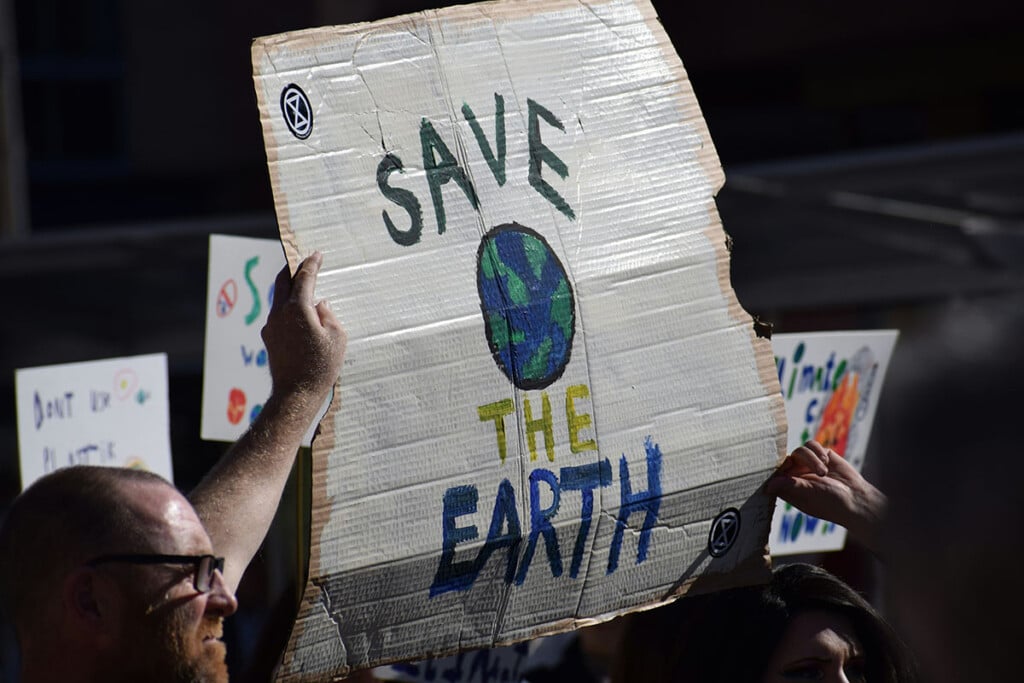
In a previous article in this issue, I outlined a case for creation care from an evangelical perspective.[1] I have purposefully refrained from using the term environmentalism to discuss matters concerning creation due to the negative connotations this term has amongst conservative evangelicals. Although I want to suggest that several aspects of secular environmentalism[2] cohere strongly with biblical creation care, I understand the reticence and scepticism evangelicals may have with environmentalism (or environmentalists). Often, this scepticism is wholly warranted. In this article, I will outline and analyse some of these concerns, putting environmentalism under the microscope of biblical truth, science, and social policy.
As Andrew Spencer wisely warns, ‘No Christian who gets deeply involved in any cultural activity [including creation care] should forget the dangers for a moment (2 Tim 2:4). The dangers are real, are subtle, and bear significant consequences.’[3] It is necessary, therefore, to warn Christians who are endeavouring to care for creation of some of the dangers they are going to face, especially so when they engage with secular environmentalism.
Detraction from the gospel
An obvious concern among many evangelicals is that an increased focus on environmental issues detracts from our primary duties: evangelism, discipleship, and worship. There is certainly merit for this concern, and examples from the liberal church have shown how quickly environmental concerns can become the dominant focus of individual Christians and churches[4] as well as how an eco-theological focus can result in doctrinal drift to unorthodox positions such as universalism, panentheism, and Liberation Theology.[5] In some of these individuals and churches, the message of salvation has become environmentally orientated and centred on present world temporal concerns to the neglect of evangelism and concern for eternal matters. In some cases, this has led to universalism being preached.[6]
As Spencer warned us above, the danger of the gospel taking second place is a danger for any Christian involved in social action, no matter what the issue is. Worship, discipleship and evangelism must be our primary focuses as the church and as individuals. However, this does not mean that other social, moral, or ethical concerns should be ignored. Rather, they must be properly ordered. Just because the danger exists for creation care to supersede the gospel, that does not warrant evangelicals neglecting it entirely. The care of God’s creation – a creation which glorifies him – is far too important an issue to simply be surrendered to the liberal church and secular society.
Instead, it should be noted that when creation care is biblically practised and biblically ordered, it supports and adorns our evangelism by making our witness more attractive to the world and gives us a hearing and opportunity to preach the gospel among those who would otherwise have dismissed us out of hand.[7] Vice versa, advocates for creation care should understand that environmental degradation is ultimately a matter of greed, sin, and a lack of appreciation for God’s glory. The ultimate need for creation thus is evangelism whereby sinners repent and are sanctified by the Spirit, which includes repenting of their sins that harm and damage God’s creation.
Inappropriate conceptualisations of the environment
Another pertinent concern conservative evangelicals have towards environmentalism is the inappropriate views, dogmas, and philosophies some environmentalists hold concerning the environment. In recent times, the concept of Gaia has raised concerns among evangelicals, as discussed further below.[8] Ultimately, though, Gaia is simply an expression of a deeper and more fundamental issue, and that is the ecocentric position that environmentalists take concerning creation. This puts creation’s needs and importance above those of humanity.
One manifestation of the ecocentric position is that some environmentalists oppose almost all actions by humans upon the natural world, thus holding a strict preservationist position. Whilst strict preservation as a practice and conservation methodology is justified where natural habitats are particularly fragile and valuable, or where it is in the public interest to preserve areas of outstanding natural beauty as wilderness areas, as an ideology, strict preservation goes against the creation mandate which gave mankind the right and obligation to subdue, manage, and change the created realm as God-ordained stewards.
It is worth considering the underlying values of the strict preservationist position. Many preservationists would argue that they are trying to safeguard the beauty of nature and the health of ecosystems. These are laudable aims, especially when we consider that creation displays the glory of God. However, it is also true that humankind’s involvement within creation often results in enhanced biodiversity and beauty and many of the habitats we see and cherish in Britain today are semi-natural: the result of the interaction between humans and nature over centuries. Rather than always being a curse to creation, as the preservationists would often assume, humankind’s actions are often a cause of blessing to creation and the species it contains. And this is what God intended.
Another more troubling value held by some strict preservationists is the deification of the environment. This is expressed by the notion that creation must not be changed because it is sacred or divine. Whilst the belief is non-mainstream, pockets of this belief are present in the Western world, and the belief is widespread amongst indigenous peoples worldwide. Sensitive but firm engagement with these false beliefs is required to undermine and subvert them whilst offering a biblical alternative concerning the inherent (not intrinsic) value creation holds[9] and why protecting creation is still important.
An additional position that needs to be considered is that a minority of environmentalists and strict preservationists view humanity as an unequivocal curse for creation, and that the solution for environmental degradation is for humankind to commit to voluntary extinction.[10] This radical position is thankfully not held by many, but a softer form is present among many environmentalists, whereby they see humans only as a problem for creation and thus call for severe reductions in the global human population.
This anti-human stance must be rejected by Christians. The Bible clearly states that humans are above creation hierarchically (Ps 8) and that humans are the only creatures made in the image of God and meant to fill the world. Furthermore, God has commanded humanity to be involved with and act upon his creation as stewards (Gen 1:26). Human involvement with creation, when done according to God’s design of good stewardship, is a blessing to creation. An example of good stewardship is that many traditionally managed agricultural habitats are among the most biodiverse habitats in Europe, and it is precisely because humans have sensitively and wisely managed creation that this is so.[11]
However, it must be reckoned with that human beings are sinners as well as image-bearing stewards, and this has affected our dealings with creation. All too often, sin results in our actions being a curse to creation and a cause of its groaning rather than a blessing. In this regard, we should concede that the environmentalists have a point about the detrimental impact that humans have had upon creation throughout history,[12] though they have taken this to an unbiblical extreme. This should be a call for repentance on our part. We have not always treated God’s creation well in a way which honours him and protects the visible expression and declaration of his glory.
False religions
Linked to the concerns above, animism, paganism, and the quasi-worship of Gaia are all in ascendence in society, and much of this is connected with environmental movements and groups.[13] While there is potential for Christians to collaborate with those of other beliefs on environmental issues, care must be taken to avoid endorsing or appearing to endorse unbiblical doctrines. When engaging with such groups, Christians should approach interactions thoughtfully, ensuring their actions reflect biblical truth. Similarly, when introducing young people to diverse perspectives within environmentalism, we should guide them wisely, providing space to discuss and discern these ideas critically rather than leaving them to navigate such influences alone. This approach equips them to live faithfully in a complex world while upholding Christian convictions.
It is also worth considering how Extinction Rebellion and similar organisations are structuring themselves almost as quasi-religions.[14] Extinction Rebellion have a doctrine of sin: carbon emissions/environmental destruction; a doctrine of repentance: sustainable lifestyle change or a commitment to veganism; a doctrine of sanctification: becoming increasingly eco-conscious and doing activism; a doctrine of evangelism: they are among the world’s most active and effective proselytisers; a doctrine of the devil: big oil and capitalism; a doctrine of God: Gaia; and a doctrine of salvation: net zero.[15]
Although not all members of these organisations would ascribe to all these doctrines, or even perceive them as quasi-religious doctrines, and while many of the actions prescribed by the doctrines are not wrong in and of themselves (such as eco-consciousness and the theoretical concept of net zero),[16] when taken as a whole, the comparison to a false religion becomes evident, and the dangers of environmental legalism and idolatry become hard to avoid. Thus, it is my firm opinion that Christians should not be members of such groups. Instead, Christians who wish to address environmental concerns in a collective manner should set up distinctly orthodox creation care organisations or institutions or should partner with existing secular environmental organisations which do not display the troubling attributes listed above.
Hopelessness and despair
Another troubling aspect of secular environmentalism is its hopelessness. This is a growing phenomenon with some environmentalists falling into despair and hysteria, encapsulated by Greta Thunberg’s pronouncement: ‘But I don’t want your hope. I don’t want you to be hopeful. I want you to panic. I want you to feel the fear I feel every day. And then I want you to act.’[17]
Christians must avoid adopting such narratives. Our lives must not be characterised by hopelessness and despair, partly because this is a poor witness to the hopeless world, and more so because we have the amazing hope of the gospel. Additionally, we have the sure and steadfast hope that even if the future is bleak environmentally, socially and economically (as it is for the majority of our brothers and sisters around the world), we know that on one great day, Christ will return and renew all things in the new and glorious creation. We also know that God will not let his creation suffer utter destruction due to our actions and that, as Psalm 104 repeatedly reminds us, he is actively sustaining his world. These are precious hopes we can offer to a despairing world.
The burden of world saving
Closely linked to the concern of hopelessness is the improper focus of many environmental organisations and advocacy groups who advocate the ‘need to save the world’. I can remember being told this on the conservation degree that I finished in 2018, and the message has become ever increasingly prevalent and radical since then. This burden to save the world is, I believe, at the core of much of the paranoia and despair we see among young environmental activists. And this is understandable. The burden of saving the world is too great a task to be placed upon the shoulders of any group of people, let alone individuals in society. It is an impossible endeavour, well beyond the capacity of our fundamental God-given limitations. When faced with the monumental scale of global environmental challenges, apathy from world leaders, and their own inherent limitations, it is no wonder that the burden of world saving is leading increasing numbers of people to despair and paranoia.
But this is a burden that should not be borne by anyone. Firstly, because we have never been commanded to save the world, and likewise, none of us has been given individual responsibility for the whole of God’s creation. ‘Saving the world’ and maintaining the created order is God’s responsibility and prerogative. Some of us may be called to work at the global environment policy level, but this will be a select few with a distinctly limited purview.
Secondly, based on a thorough acceptance and understanding of the goodness of our God-given limitations, Christian truth can offer a liberating alternative to the burden of world saving. We can argue that each person has been given the responsibility to be a good steward of their God-given local place; they have not been given the responsibility to steward, let alone save, the entire world. Demarcating the boundaries of our care in this manner creates a more humane-scaled responsibility that is coherent with our limitations and our ability to care.
To take a pastoral example: the pastor of a church of 50 members can, simply by nature of the smallness of his flock, devote more time and more personally tailored care to each member than the megachurch pastor who has a church of 5,000. It is the same with creation care. Trying to save the world will only lead to burnout and despair. However, working to steward well and contributing to the amelioration of the environmental problems in your local area is a task sufficiently great, and sufficiently small, for us all.[18] We all can care well for our local areas with wisdom and local knowledge – we cannot do this for the whole world. I strongly believe that actions, advocacy, and sustainable living enacted at the local level can achieve the significant healing of God’s creation that Francis Schaeffer argues should be one of our aims in this life as Christians and stewards of God’s good creation.[19]
Radical action
Finally, one of the major concerns conservative evangelicals have with environmentalism is the radicality of some of the solutions and practices proposed by environmentalists. Some of these practices can be quickly dismissed as wholly inappropriate for evangelicals to be engaged in. The trend of defacing public artwork as an attention-grabbing stunt is one such practice which not only is foolish but also self-defeating in that it antagonises the general public rather than wins them over to environmental concerns. Other actions to be rejected have had more damaging effects such as the blocking of roads and crucial infrastructure.
More complex to assess are the solutions proposed in climate mitigation. These call for nuance and scientific, social, and economic analysis and trade off. It is beyond my expertise to make an assessment of the models and projections of the Intergovernmental Panel on Climate Change with regards to climatic change. But if they are correct, it is likely that rapid decarbonisation is required to avert severe climatic change. However, rapid decarbonisation comes with its own challenges and societal ramifications, which are often dismissed or overlooked by advocates of rapid decarbonisation and net zero.
Rapid decarbonisation would require a significant reduction in economic activity to compensate for the shortfall in energy generation capacity, as the transition to renewables and clean energy will take time. This would cause a significant economic shock far exceeding the impact that the COVID-19 lockdowns had. The resultant severe social, economic, and cultural ramifications will immediately affect vast swathes of the global population.[20] The social upheaval and inevitable political unrest may result in impacts to human wellbeing that are more severe than those caused by future climatic change. However, on the flip side, severe climatic change is likely to cause permanent ecological and infrastructural damage, which in the long run may prove more difficult to ameliorate than immediate short-term societal and economic shocks caused by rapid decarbonisation.[21] Regardless, rapid decarbonisation is a radical proposal whose implications have not always been thoroughly worked out by its advocates. It should be viewed with extreme caution.
Finally, it is worth considering that there are significant technical problems and natural resource constraints facing those advocating for net zero and rapid decarbonisation. Much of their hope is pinned on a rapid energy transition to widespread clean energy and renewables. However, as Vaclav Smil notes in his paper Examining energy transitions: A dozen insights based on performance, it is unlikely that there are enough reserves of the metals and materials needed for a complete global clean energy transition.[22] These realities and constraints need to be acknowledged by environmentalists. Otherwise a significant amount of effort and investment may be wasted on schemes and projects doomed to fail.[23] Compromise solutions are needed to resolve complex energy problems, but the current environmental discourse deals in extremes and zero-sum games rather than compromise and collaboration.
Conclusion
Though the dangers facing Christians who embark on environmental action are significant and many, I would hate for the outcome of this paper to be that Christians are dissuaded from doing actions of creation care or engaging with environmentalists. As I have said, creation care is far too important an issue to leave to the liberal church and secular environmentalism. God loves his creation. It showcases and declares his glory and is a means of his common grace flowing into our lives. He has given us the immense privilege of being stewards of his immeasurably valuable gift, and thus we have a responsibility to be good, sustainable, wise, and benevolent stewards of his great and beautiful gift to us. Mindful, yes, of the dangers, but more so thankful for the immense privilege we have been graciously given to do.
Footnotes:
[1] See An Evangelical Case for Creation Care in this issue.
[2] Such as a concern for species loss, a concern that environmental degradation disproportionately affects the poor, and a desire to safeguard beauty.
[3] Andrew J. Spencer, Hope for God’s Creation (Nashville: B&H Academic, 2023), 19. We have included a review of this book in this issue of the Bulletin.
[4] An example, in my opinion, of overdoing creation care within the life of the church is the award framework from Eco congregation Scotland http://www.ecocongregationscotland.org/award/
[5] See Andrew J. Spencer, Doctrine in Shades of Green (Eugene: Wipf & Stock, 2022) for an extended analysis and critique of liberal and ecotheological Christian belief in terms of creation care from a conservative evangelical position.
[6] Spencer, Doctrine in Shades of Green, 95.
[7] I have personally experienced this and was able to share the gospel with some of my fellow students at university because they saw that I was environmentally concerned and that we had this in common.
[8] Gaia refers to a view, inspired by the Gaia hypothesis, that portrays the Earth as a living, self-regulating system, sometimes revered as a quasi-divine entity in certain environmentalist circles, which can conflict with biblical teachings about creation’s relationship to God. For a broader critique of such quasi-religious narratives, see Dr Paul Mills’ The False Religion of Climate Alarmism in this issue.
[9] Intrinsic value would suggest creation holds value in and of itself apart from its relationship to God. Inherent value conversely states creation’s value is contingent on the value God has ascribed to it. See Andrew Spencer, Hope for God’s Creation for a thorough treatment of this distinction.
[10] See here: https://www.theguardian.com/lifeandstyle/2020/jan/10/i-campaign-for-the-extinction-of-the-human-race-les-knight
[11] See my essay here for more on this: https://overthefield.substack.com/p/a-landscape-rich-in-people-and-in
[12] Mark Stoll’s book Profit: An Environmental History (Polity: Cambridge, 2023) is a good book to explore the history of environmental degradation, written by a secular scholar who is sympathetic to Christianity (and especially the Puritans!).
[13] See: https://www.theguardian.com/uk-news/2022/nov/29/ten-things-weve-learned-from-the-england-and-wales-census
[14] The religious aspect and spiritual undertones of these groups has also been broadly overlooked as this paper outlines https://religioninpublic.leeds.ac.uk/2020/01/23/fa-series-the-religion-of-extinction-rebellion/
[15] Dr Mills unpacks these quasi-religious elements further in his article The False Religion of Climate Alarmism later in this issue.
[16] Though I believe there are significant practical, social, energetic and material challenges associated with Net Zero which hamper its real-world effectiveness and suitability. However, this is not to suggest that we should not endeavour to reduce greenhouse gas emissions as much as possible. We should do this.
[17] From a speech given at Davos in 2019 https://www.theguardian.com/environment/2019/jan/25/our-house-is-on-fire-greta-thunberg16-urges-leaders-to-act-on-climate
[18] For example, by committing to buying some of your food from farmers who are seeking to manage their lands in an ecologically sound manner, or by joining a conservation work party.
[19] Francis Schaeffer, Pollution and the Death of Man, (Wheaton: Tyndale House, 1970) 66.
[20] https://www.sciencedirect.com/science/article/pii/S0360544220311324#sec6
[21] Such as if the gulf stream broke down, a scenario that an increasing number of climate scientists are warning is a possibility in our lifetime https://geographical.co.uk/climate-change/what-would-happen-if-the-gulf-stream-collapsed These projections are based on complex modelling that makes it difficult to judge the merits of these claims.
[22] See: https://www.sciencedirect.com/science/article/abs/pii/S2214629616302006
[23] This is not to suggest that future projects for renewables and clean energy should not go ahead, but that environmentalists need to be realistic about the scale of what they can achieve.

Related articles



Stay connected with our monthly update
Sign up to receive the latest news from Affinity and our members, delivered straight to your inbox once a month.